June blog – Stabilized approaches and more
Stabilized approaches, density altitude, former client from FSI reaches out, a link to my YouTube channel
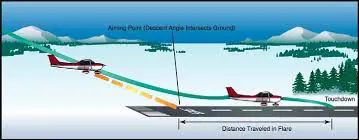
Stabilized approaches (constant speed and rate of descent) are in the news again, because some pilots do not fly a ‘stabilized approach’, and then as a result, things go can wrong during the touchdown and landing rollout. Even the NBAA, (National Business Aviation Association) mentions this in the June 4 issue of AvWeb Flash, an industry e newsletter. It was reported that the NBAA’s latest accident and incident analysis highlights ‘stabilized approaches’ as being a continuing area of concern for business aviation operators.
Keep in mind that these are professionally trained pilots typically flying jets and turboprop aircraft. It states that there were 40 ‘safety events’ during the first quarter of this year, including six fatalities. So, if even professional pilots flying sophisticated turbine equipment are having trouble, then this is a lesson for all of us! We can all learn something.
A local airport, Fullerton (FUL) which has a runway 3,121’ long, has had some landing accidents in the past few years, resulting from pilots who were not ‘stabilized’ on final, but instead were too fast or too high, thus not ‘stabilized’ with a constant rate of descent. Then, due to poor energy management, while in the flare, they floated too far down the runway (in ground effect) before touching down and then were either not able to get stopped in time or they lost control and ran off the side of the runway. Not a good outcome, regardless.
At May’s FAPA (Fullerton Airport Pilot Association) meeting, the local FAA Ops Inspector/FPM (FAASTeam Program Manager), Nate spoke to us about this for a few minutes at the start of the meeting. He reminded us, and emphasized, if an approach is not going well, if it is becoming ‘un-stabilized’ for any reason, then GO-AROUND!! But some pilots are just reluctant to do this, for their own reasons. Is it pride? Ego? Trying to salvage an approach? Maybe all three!?
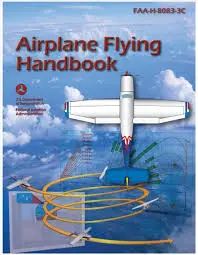
The FAA discusses ‘stabilized approaches’ in its Airplane Flying Handbook (AFH), (FAA-H-8083-3C) last published in 2021, in chapter 9, Approaches and Landings.
In fact, the term ‘Stabilized Approach Concept’ is spelled out on page 9-4 of the AFH. And this is or should be emphasized whenever a pilot is training. I know that in my time at FlightSafety Int’l in Long Beach, where I was an instructor for many years until the pandemic hit and I lost my job, we preached and trained ‘stabilized approaches’ all the time! The FAA requires stabilized approaches to be flown. A stabilized approach leads to a good landing. This is nothing new. Yet landing accidents continue to occur.
xxx
And now it’s June, and we are well into summertime flying. Summer weather flying hazards include thunderstorms and density altitude. Both require the right conditions to occur. I have actually flown through some thunderstorms decades ago. I was not scared as much as I was awestruck (seriously!) by the power in Mother Nature! Simply amazing! And something back then triggered my interest in and fascination with weather, which I still study!
You NEVER graduate from this kind of study. It’s a lifetime thing. There’s always MORE to learn! And I’m a student of flying, which includes aviation weather! Always something to learn or review! Never ends. That is part of the fascination, for me!
But today I want to focus on density altitude! Summer weather typically includes hotter temperatures. This directly affects airplane performance, which gets worse as a result of ‘density altitude’. Remembering back to science class in grade school, when the air is warmer, the molecules are farther apart, thus the air is ‘less dense’. On cold weather days, it’s the opposite.
Four things can result in density altitude ‘increasing’ when it’s warmer. They are; higher temperatures, higher humidity, higher elevations and lower barometric pressure, aka a lower altimeter setting.
These, in turn, affect the airplanes performance, thus; with less dense air, the engine produces less power. The propeller has less air to ‘bite’ as it turns, and there is less airflow over the wings. All of which combine to result in a longer takeoff roll and a slower climb.
So, to demonstrate how this works, here is an example; if a sea level airport has a 3,000’ runway, as the temperature increases, the performance will suffer, and the airports ‘density altitude’ will increase. And there is a ‘rule of thumb’ which states that for every 10F increase in temperature, the density altitude will increase by 1,000’ feet! And a longer runway will likely be required for takeoff under these conditions. And the climb rate will decrease as well. Even turbine powered aircraft (jets) are affected.
To find out for sure, you could look this up the AFM (Airplane Flight Manual) or POH (Pilot Operating handbook) for the airplane you fly, in chapter 5, Performance, and look at the performance charts. There are density altitude accidents every summer. You have to be aware of this when doing your flight planning.
xxx
On a completely different note, this morning, a former client of mine from FlightSafety Int’l saw my posts on Facebook and reached out to me via FB Messenger! What a nice surprise to hear from him! And I still had his contact info in my iPhone contacts. I still have ALL of my former clients and FSI colleagues’ info in my contacts. Turns out he was a client back in 2013, when I was a King Air instructor. Wow. We chatted back and forth on the Messenger app for a while and got caught up! It was a really nice surprise hearing from him! It’s a small world in aviation! Never know who you might see again years later! And it’s fun to reconnect!
xxx
I have had a YouTube channel for a few years but have not done much with it. But that is changing now. Time to start using it! The plan is to hopefully add safety and educational videos each week, or as often I have one to upload. I am new to this, so there is a learning curve.
Here is a link to my YouTube channel https://www.youtube.com/@johnmahanycfi
xxx
Finally, IF you are in need of an experienced instructor to work with you, in YOUR AIRPLANE (I only work with aircraft owners, not renters) to improve ‘rusty’ IFR or VFR piloting skills, provide avionics training, add or finish your instrument rating, or anything else, I AM available! I WILL travel to YOUR location. Contact me for more information.
Also, in addition to flying and training pilots, I am also a freelance writer and a speaker on aviation safety topics.
Fly safely!
John
Recent Posts